1X's home robot NEO enters production, with US deliveries starting this year
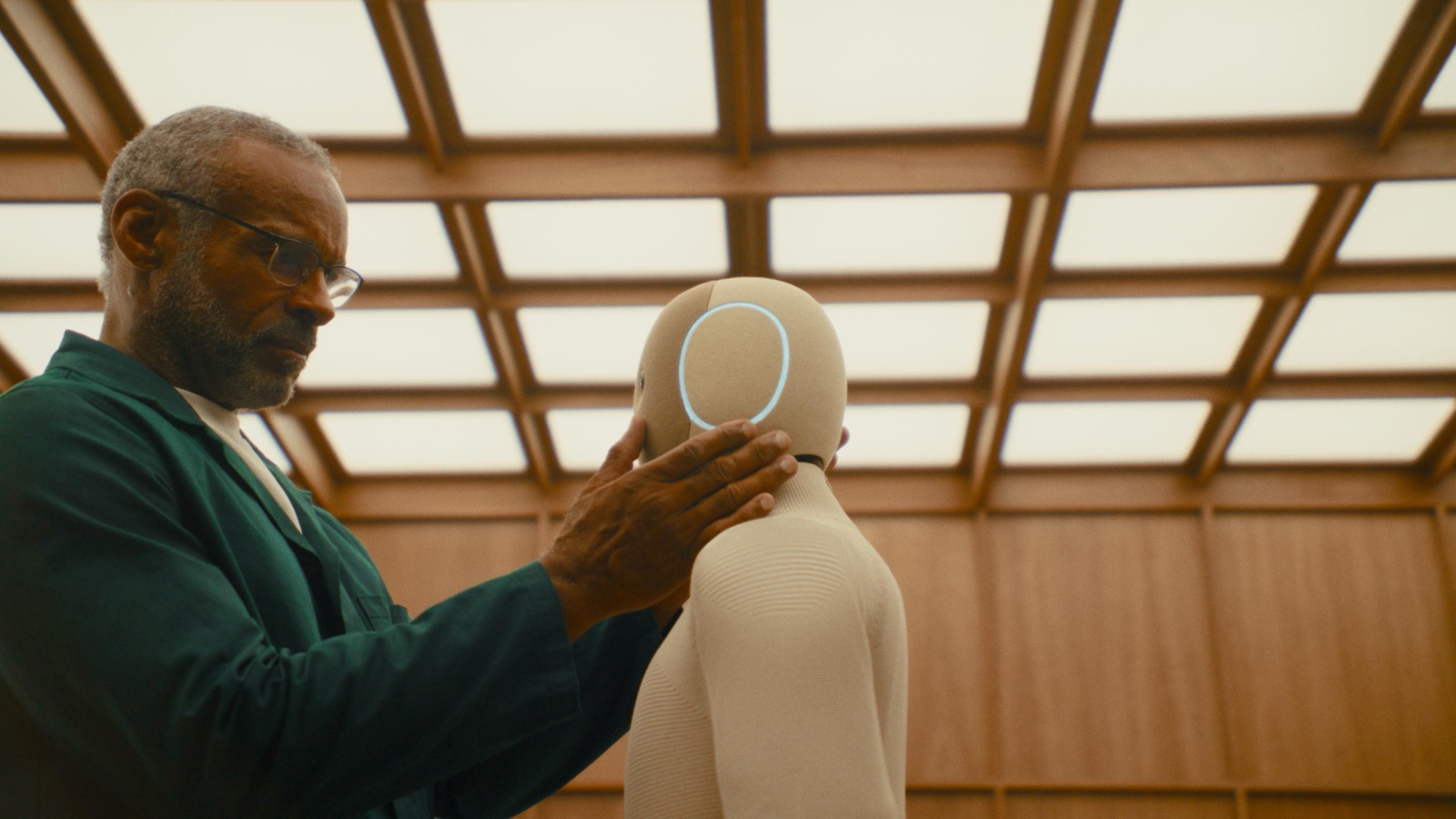
A 58,000-square-foot factory, and why it deserves its own story
On April 30, 1X's NEO Factory in Hayward, California, began full-scale production. In the company's words it is America's first truly vertically integrated, high-volume humanoid robot factory — 58,000 square feet (about 5,400 square meters), more than 200 employees, with most of NEO's critical components built in-house, from cutting metal parts to fully automated motor coil-winding lines.
The backstory starts six months earlier. On October 28, 2025, 1X launched NEO, its home robot, and booked out the following year's entire production capacity within five days — 10,000 units by the company's count. Founder and CEO Bernt Børnich admits in the post that the question they receive most is simply: where is my NEO?
He explains why the company opened preorders first. The product was worth showing — he says NEO is already better than advertised, and breakthroughs such as its world model will unlock more AI functionality; planning demanded it, since knowing who wants a NEO, where they are and how many there are informs production planning and market entry; and it connected the team with early adopters, with dozens of early customers already in touch and helping sharpen the feature set. The factory was accelerated over the same stretch: 1X says it moved as soon as final permits arrived in January, standing up the Hayward plant and hiring over 200 people within three months. Børnich offers a telling line — most people think humanoids are a robotics problem, but they are wrong: it is a manufacturing problem, and production makes prototypes look easy.
The vertical-integration list: from a spool of copper to a robot
At 1X, vertical integration comes with an itemized list: motors, batteries, structures, transmission systems, soft goods and sensors are all designed and manufactured in-house; for the few parts not made in its own plant, the company works inside suppliers' facilities to design, develop and enforce its own quality standards. The stated payoff is threefold: lower hardware cost, faster iteration, and greater resilience when geopolitical events hit supply chains.
The most persuasive number is on motors: 17,000 units manufactured since production began in Hayward. The Revo2 motor is the heart of NEO's tendon-driven actuation, refined since 2015 starting in Moss, Norway; the line begins with a spool of copper and ends with a fully assembled tendon-driven actuator, with steps such as winding its own copper coils and fabricating stators from electric steel handled by machines 1X engineers designed and built. The company calls it the highest-performance, lowest-cost electric motor in humanoid robotics — a claim no third party has verified, though the line is genuinely running.
Batteries are another in-house line. They use aerospace-grade cells with a proprietary battery management system sampling at 100 Hz — roughly 100 times faster than typical commercial packs — enabling real-time monitoring of state of health and more accurate predictions of performance, state of charge and state of function. The line is designed for high-volume automation and completes a weld every 500 milliseconds, with capacity for 10,000 batteries a year. 1X highlights one design innovation: side cooling on both the top and bottom of the pack, pairing thermal management with scalable production.
The brain is called NEO Cortex: every robot off the line carries NVIDIA Jetson Thor for real-time inference on safety-critical functions, perception, reasoning and decision-making without leaning on heavy cloud compute. Its sensors include dual 8.85 MP, 90 Hz stereo fisheye cameras, beam-forming microphones for directional audio and IMUs, all mounted on custom racking designed and built in-house with a thermal system meant to keep powerful hardware running efficiently and quietly.
Hands are another in-house focus: NEO's tendons and structural parts — fingers, palms, wrists and forearms — are made on a dedicated line, before proprietory polymers mold the soft flesh and outer gloves with an advanced tactile-sensing stack integrated through them. In July 2026, 1X announced a new 25-degree-of-freedom tendon-driven hand, describing near human-level dexterity, strength, safety and reliability; hundreds have been produced on a scalable line, with capacity planned at 10,000 in 2026 — early units prioritized for internal testing and employee homes.
The distance from design to production is shrinking too. The first NEO took a year to go from CAD to walking; the latest version built in Hayward took one month. The new-product-introduction line sits next to the machine park, so design and manufacturing engineers can go from a CAD release to physical parts in as little as a few hours, testing new designs long before they reach mass production.
Price, capacity, and the gap between starting production and delivering
There are two ways to buy: a one-time purchase of $20,000 including a three-year warranty and priority delivery, or a $499 monthly subscription. Demand appears to be there — the first year's capacity of roughly 10,000 units sold out within five days of opening on October 28, 2025, which is the direct reason 1X felt able to accelerate the factory. Capacity targets come in two steps: the Hayward plant plus the San Carlos facility coming online later this year together support up to 10,000 NEOs a year, and with planned increases in automation the company aims to scale past 100,000 units annually by the end of 2027.
The assembly approach is worth a paragraph, because it defines what mass production means here. 1X says the line is designed around continuous flow rather than traditional departments, favoring single-piece flow and batching only where physics demands it; each station receives pre-kitted modules; functionality is added through progressive bring-up with in-line verification at every critical step, so problems surface immediately rather than at the end of the line; intelligent tooling is built so that if the part fits, it is right; tendon joints are conditioned to eliminate early-life failures; and every build is digitally traceable down to the individual component and torque value.
Delivery claims need stating precisely. Officially, deliveries to US Early Access customers begin within 2026, followed by subscription customers; Børnich puts it more plainly — some will get their NEO this year, some later — and notes the internal home-testing program has to expand, because more 1X employees need NEOs. As of October 2026, however, no confirmed first customer delivery is visible in public channels. That is the two-sided nature of this story: the factory is producing and robots are rolling off the line, but starting production is not the same as shipping at scale.
Robots building robots
By 1X's account, NEOs are already helping around the factory: collecting real-world data and using the 1X world model to learn practical tasks — stocking parts for assembly technicians and performing basic warehousing and logistics. In the coming months they are expected to take on longer-horizon work such as facility security. The long-term picture is drawn far out: from factory assistant to a general-purpose robot that handles household chores, builds robots, and supports chip fabs and data centers.
Put back in industry context, a home robot reaching the factory-production-to-real-delivery stage for the first time is worth recording: vertical integration, in-house motors and batteries, and self-built lines are the classic play for holding both cost and cadence in your own hands. The real test, though, is not a news release about a line starting up but the delivery numbers over coming quarters — and whether these robots are reliable enough in real homes to justify $20,000 or $499 a month.