Agility unveils Digit 5: its first cooperatively safe industrial humanoid, with over $300M in orders
Treating safety as a product
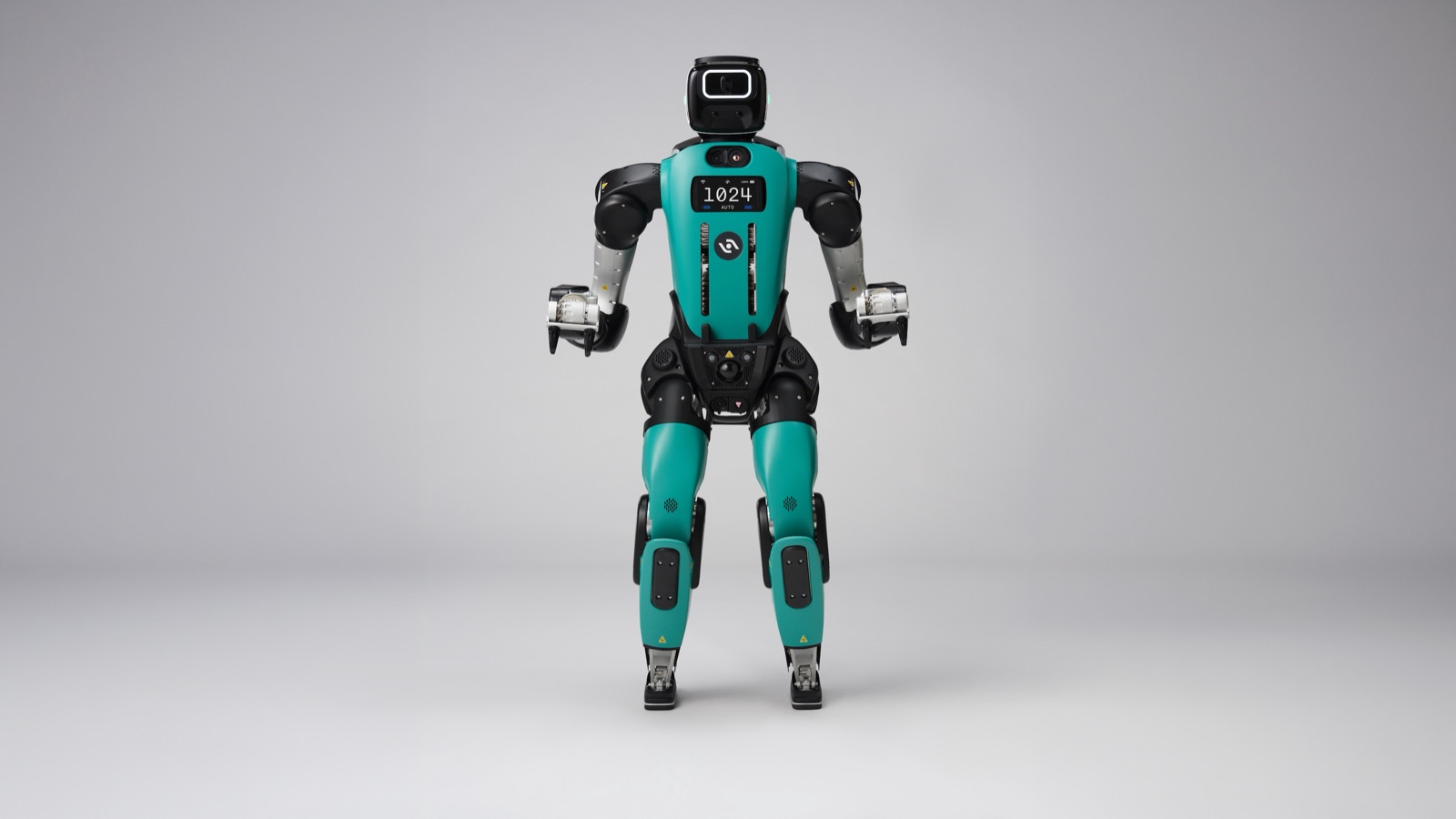
On September 15, Agility Robotics unveiled Digit 5, the next generation of its general-purpose humanoid and the company's first robot engineered for cooperatively safe work at scale. In its words, it can work in close proximity to people without the physical safety barriers traditional automation requires — which sounds like a single safety feature but in fact decides whether humanoids can enter workshops where people already work.
CEO Peggy Johnson put the logic plainly: Digit 5 is removing a major barrier to scaling humanoid robots in industrial environments, and it was built to the exact requirements customers gave after three years of Digit 4 working on their production floors. The market responded with more than $300 million in multi-year orders and a growing pipeline of customers across manufacturing, warehousing and logistics.
Safety is indeed one of the biggest obstacles to commercial deployment. Traditional industrial robots keep people apart with fences; if a humanoid also had to be fenced in, half its value would disappear — what it is good at is walking the routes people walk and using the workstations people use. Digit 5's new safety architecture is therefore designed to reduce dependence on protective barriers, and it comes in three parts.
First, safe human detection: proprietary AI algorithms and multiple sensor technologies continuously monitor for people and autonomously avoid, stop or assume a seated position. Second, safety cues: visual and auditory signals convey the robot's motion intent so nearby people can take part in safe operation. Third, safe motion control: an independent safety controller oversees the robot's response when a person is detected within an unsafe distance and instantly triggers the appropriate safety response.
That architecture builds on a milestone already achieved: Digit became the first humanoid to pass an independent field evaluation on a customer production line for industrial safety standards administered by the U.S. Occupational Safety and Health Administration (OSHA). Agility is also advancing this safety stack with NVIDIA as the first launch partner for NVIDIA's Halos for Robotics platform, pairing its systems with NVIDIA IGX Thor and Halos Core infrastructure. Deepu Talla, NVIDIA's vice president of robotics and edge AI, said that operating safely around people and assets is what moves humanoid robots from pilots to industrial deployments at scale, and that Digit 5 builds on more than 65,000 hours of real-world operation combined with a safety architecture developed on NVIDIA IGX Thor and the Halos safety framework for robotics.
Agility is also helping shape the standards that will govern such robots: it is a project leader and active contributor to ANSI/A3 TR R15.108, the technical report covering dynamically stable industrial mobile robots including humanoids in the United States and Canada, and a participant in ISO 25785-1, the first international safety standard for the humanoid category.
Lifting more, charging faster, reaching higher
Digit 5's hardware upgrades come down to four sets of numbers. Payload rises 40%: a new leg design engineered to withstand repetitive lifting, using proprietary cycloidal actuator technology, lets Digit 5 repeatedly lift loads of 50 pounds (22.7 kilograms), covering single-person lifting tasks in OSHA-regulated facilities.
Charging is compressed far more aggressively: a new 90-minute-runtime battery system charges in just nine minutes, giving Digit 5 a 10:1 run-to-charge ratio against Digit 4's 2:1 — more than 20 hours of productive work in a 24-hour day. For industrial customers computing return on investment by the hour, that ratio may be more persuasive than any hardware specification.
The end effectors are swappable, with ISO-standard mounting flanges so tools can be changed for the job at hand, covering everything from tote handling to machine tending while balancing productivity and task breadth.
Physically, Digit 5 weighs 284 pounds (129 kilograms), stands 5 feet 11 inches (1.81 metres) and can reach up to 7.2 feet (2.2 metres), against Digit 4's 5.5 feet ceiling. Those dimensions are deliberately human-scale: the robot needs to reach shelves built for people, walk through aisles and doorways left for people, and stand at workstations people use.
From totes to the whole workflow, and out to Europe
The capability boundary is expanding too. Since its first commercial deployments, Digit 4 has focused largely on tote-based material handling; Digit 5 will use Agility's proprietary physical-AI capability training to add manipulation skills and cover a facility's full workflow — depalletising goods as they arrive, then machine tending, kitting and sequencing, quality inspection as items move through the facility, and finally palletising for shipment. Working with Agility's robot management platform, Digit coordinates each handoff with a facility's existing autonomous mobile robots and conveyor systems.
Field record is the evidence for that claim. Digit has the longest tenure among humanoids working in industrial facilities, with nearly three years of continuous commercial deployment: Digit 4 has logged more than 65,000 hours across customer sites in North America including GXO, Schaeffler, Amazon and Toyota Motor Manufacturing Canada. At GXO's Flowery Branch site near Atlanta, Digit 4 reached a cumulative 100,000-tote milestone while maintaining roughly 98% accuracy while on task. Orders tell the other half of the story: as of May 2026, Agility had more than $300 million in multi-year customer orders for Digit 5, subject to satisfaction of certain contractual milestones, with a pipeline spanning manufacturing, warehousing and logistics — evidence that customers are moving from pilots to full-scale deployment.
On fleet management, Digit 5 remains fully integrated with the Agility Arc cloud platform. Arc provides operational visibility into fleet KPIs such as uptime, throughput and mean time between incidents, and connects with customers' existing warehouse management, warehouse execution and manufacturing execution systems — for a customer scaling from a few pilot units to dozens, that software layer decides whether the robots are an asset or a pile of individual machines.
Data security gets a section of its own: Agility protects the Digit platform with end-to-end encryption, strict access controls and localised data processing. The robot navigates and works safely using onboard cameras, depth sensors and inertial measurement units, processing sensor data locally and sending only essential system health and diagnostic information to Arc. Transmitted data is encrypted, segregated by customer and secured with mTLS and TLS 1.2 or above rooted to a private certificate authority, while data stored on the robot is encrypted at rest.
Manufacturing and expansion are the final pieces. Digit is assembled at RoboFab, Agility's 70,000-square-foot facility in Salem, Oregon — the first factory purpose-built to assemble humanoid robots at scale, designed for up to 10,000 Digits a year at full capacity and more than 500 employees. The Pittsburgh office leads engineering testing, validation and skills development, while the new Fremont, California facility opened in July 2026 serves as the hardware and physical AI development hub. Beyond the United States and Canada, Agility plans for the first time to make Digit available outside North America, starting with the European Union and the United Kingdom; Digit 5 is expected to carry a CE mark and additional regulatory marks to open those markets.
The doubts are clear enough as well: the $300 million-plus in orders carries milestone conditions, the 98% accuracy figure applies to specific tasks, nine-minute charging depends on supporting battery and charging infrastructure, and humanoids entering production lines still need to cooperate with autonomous mobile robots and conventional automation rather than replace them wholesale. Taken together, though, the details trace a path that looks different from a demo video: three years of real operating data used to define the specifications for the next generation, followed by customer safety and operations systems that accept it.