Samsung's Q3 operating profit hits 107.4 trillion won, the first 100-trillion quarter for a Korean company
The first quarter above 100 trillion won
On October 8, Samsung Electronics published its earnings guidance for the third quarter of 2026: operating profit for the July-to-September period is estimated at 107.4 trillion won, about $79.8 billion at the exchange rate used in the report, up 782.5 percent from a year earlier. It is Samsung's fourth consecutive quarter of record revenue and operating profit, and the first time a South Korean company has reported quarterly operating profit above 100 trillion won.
The revenue line is just as striking. Samsung expects consolidated third-quarter revenue to rise 126.6 percent year over year to 195 trillion won. Net profit is not part of the guidance: as is customary for Korean listed companies, the preliminary estimate released at quarter end covers only revenue and operating profit, while divisional detail, net income and cash flow wait for the full report.
The 107.4 trillion won figure beat the average market forecast by 1.6 percent, according to the financial data arm of Yonhap News Agency. Operating margin is therefore estimated at 55.1 percent, the highest in Samsung's history — a level usually associated with software or platform businesses rather than a company whose core is heavy manufacturing.
Samsung notes in its official disclosure that these figures follow K-IFRS, the accounting standard used in Korea, and that local disclosure rules do not permit ranges, so the published numbers are the median of its estimate range. That matters for everything that follows: these are management estimates for the quarter, not audited results.
Only Saudi Aramco has posted a comparable quarterly profit
Seen globally, the rarity becomes clearer. Apple and Nvidia have long topped the profit tables among technology companies, yet neither has produced quarterly operating profit on the order of $80 billion. The report points to a single comparable precedent: Saudi Aramco's $86.5 billion operating profit in the second quarter of 2022, when the war in Ukraine drove oil prices up, equal to roughly 116 trillion won at the exchange rate of the time.
The source of the profit — and the cycle behind it — still differs. An oil company's windfall rests on a single variable spiking; Samsung's upswing comes from semiconductor demand driven by artificial-intelligence infrastructure investment, and it lands in memory chips, an industry famous for violent cycles.
Samsung disclosed no divisional breakdown, but the market widely assumes the Device Solutions division, which houses the semiconductor business, supplied the overwhelming majority of the profit. In other words, the guidance tells almost no story other than memory.
Price hikes, HBM4 and the AI-infrastructure chain
Samsung attributes the results to continued growth in global AI infrastructure investment: compute build-out lifts semiconductor demand, creates shortages, and keeps memory prices elevated. The chain is not complicated — training and serving large models requires large numbers of accelerators, accelerators require high-bandwidth and server memory alongside them, and because memory fabs take years to build and supply responds slowly, prices move fast when demand jumps.
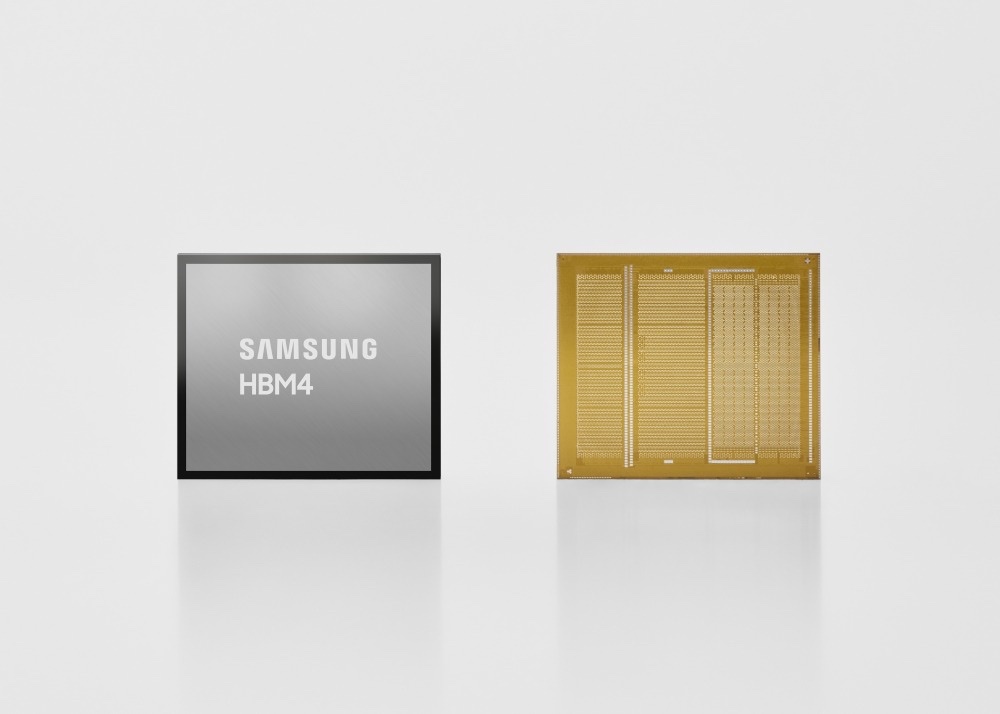
High-bandwidth memory is the tightest link in that chain: it stacks multiple DRAM dies vertically with through-silicon vias and packages them together with the GPU, a far harder manufacturing and yield problem than ordinary memory. Samsung notes that it was the first in the industry to begin mass production and shipment of HBM4, the sixth-generation part, and expects HBM4 to contribute meaningfully to earnings starting next year.
Industry observers broadly expect favourable conditions to last at least through next year, with some projecting Samsung's operating profit at around 550 trillion won in 2027. That is a forecast, not a commitment, and it rests on two premises: memory prices staying high and AI capital spending not rolling over. Memory history repeatedly shows that neither premise lasts forever.
Consider the investment rhythm: in a boom, memory makers typically plough profits back into new capacity, and new capacity takes two to three years to come online. By the time it all arrives, prices have usually begun to fall. That mechanism explains both why memory earnings curves swing so hard and why today's numbers are worth recording but not worth extrapolating in a straight line.
Memory alone: non-memory chips and consumer devices still lose money
The guidance contains no divisional figures, but industry estimates agree: inside the chip business, the non-memory parts — System LSI and foundry — are believed to have stayed in the red, with combined operating losses of around 1 trillion won. Analysts point to the running costs of the Texas fab as one drag, while noting that both businesses have begun to show signs of recovery as capacity utilisation improves.
The state of foundry and System LSI is the structural question that has drawn the most attention to Samsung in recent years: money earned in memory is spent financing the chase after leading-edge process technology, while leading-edge customers and yields take much longer to accumulate. Comparing these businesses with the margins of pure-play foundries has long been a favourite debate in the market.
Consumer electronics are under pressure too. The Device eXperience division, which covers phones, televisions and appliances, is estimated to have lost money for a second consecutive quarter: mobile and network operations are assessed to have posted operating losses above 1.5 trillion won, while displays and home appliances may have lost around 500 billion won. Rapidly rising component prices squeeze the cost base of finished devices — the other side of the same memory-price coin.
A boom for the upstream and a squeeze downstream is not unusual when the semiconductor cycle turns up: price increases move profit from device makers to component makers. Samsung's structure is unusual because it is both component supplier and device maker, so the same price moves create gains and losses inside one company. The net effect only becomes clear when divisional numbers are published.
Samsung says the full earnings report will be released later this month, when the numbers for Device Solutions, memory, foundry, System LSI and Device eXperience will all be confirmed. Until then, what is worth remembering is not the 107.4 trillion figure itself but where it comes from: memory demand created by AI compute build-out, and the asymmetric payoff of a company that bets on memory and leading-edge logic at the same time.