AutoFlight signs a 30-aircraft eVTOL order, China's first completed through financial leasing
An order for 30 aircraft — and how it gets paid for
On September 10, AutoFlight, Anhui Tianze Lingjie Aviation (Lingjie Aviation) and Wanjiang Financial Leasing formally implemented a three-party strategic cooperation agreement, which includes a purchase agreement between Lingjie Aviation and AutoFlight for 30 V2000CG CarryAll aircraft. It is another sizable batch order for a ton-class eVTOL in China, and the one deliverable the three partners put explicitly on the record.
Under the agreement, AutoFlight will deliver a first batch of five V2000CG aircraft this year, two of which were handed over in September, with the rest of the order to follow as operating scenarios expand and market demand develops. Delivery is structured to move in batches alongside a gradual ramp-up in operations — and for equipment as new as an eVTOL, delivering a few aircraft and flying meaningful hours early usually matters more than filling a hangar at once, because it tests production, airworthiness and operations on three fronts at the same time.
Lingjie Aviation's approach starts with cargo. Using AutoFlight's eVTOL products, it plans to begin trial operations in logistics, emergency response and medical transport, validating the business model with real flight data and refining industry standards through continued practice. That trial-first, standardize-later path is close to a consensus in the low-altitude economy: rules for a new industry cannot be written in an office, only probed through real operations.
Why the leasing structure is the real story
The news here is the payment structure: the purchase uses a financial leasing model, with Wanjiang Financial Leasing providing the leasing service. According to the companies, this is the first eVTOL transaction in China completed through financial leasing, marking that ton-class eVTOLs now qualify as general financial products — an innovative marriage of industrial equipment and finance. Put differently, the transaction moved from a buyer-and-seller pairing to a buyer-seller-funder structure, which is exactly the form volume purchasing requires.
Financial leasing solves a structural problem. eVTOL deals suffer from a mismatch in which the upstream pays in advance while the downstream pays in installments: the manufacturer has to invest in production capacity and supply chain first, while the operator wants to pay gradually as it uses the aircraft. Leasing bridges the funding gap, helping the manufacturer collect cash faster and lowering the barrier to a deal, which links production and operations more efficiently and gives scaled commercial operations sustainable financial backing.
In aviation, financial leasing has long been mainstream: aircraft are heavy assets, and airlines prefer to lease rather than buy with their own capital. Applying the same tool to eVTOLs means these aircraft are starting to be treated by financial institutions as assets that can be priced, assigned a residual value and written into standard contracts, rather than as novel equipment requiring case-by-case approval. For the low-altitude economy this may be a harder progress metric than kilometers flown: only what can be priced can be replicated at scale.
Who the three parties are
Lingjie Aviation is an aircraft trading and capacity-services platform focused on the low-altitude economy and new-energy aviation, building an asset-plus-operations model for the sector from its base in Anhui. Positioning itself as a trading and capacity platform suggests it does not intend to be a conventional general-aviation operator, but to allocate and dispatch aircraft as assets.
Wanjiang Financial Leasing was founded in 2011 as the 18th financial leasing company approved by China's banking and insurance regulator, and is part of Anhui Transportation Holding Group, with years of work in aviation, shipping and advanced manufacturing. Leasing firms that grew out of transport infrastructure usually have real asset-disposal and residual-value expertise, which is the precondition for treating an aircraft as a financial product.
Alongside the purchase agreement, AutoFlight and Lingjie Aviation said they will jointly pursue future OC certification and commercial operations, combining AutoFlight's strengths in aircraft manufacturing, airworthiness certification and technical support with Lingjie's capabilities in scenario operations, market development and customer resources, to build an integrated manufacturing-and-operations ecosystem for the low-altitude economy. Note the wording — pursuing future OC certification — which means these aircraft still have a stretch of certification and operating approvals ahead of them.
OC here stands for operator certificate. In China's civil aviation framework, an aircraft typically passes several gates on the way to commercial service: the type certificate (TC) shows the design meets airworthiness requirements; the production certificate (PC) shows the manufacturer has a quality system capable of building to the approved design; the airworthiness certificate (AC) applies to an individual aircraft; and the operator certificate (OC) is held by the operator and determines whether it can carry passengers or cargo under approved operating rules. Even after certification, routes, takeoff and landing sites, crew training, insurance and airspace coordination all have to be in place before anything truly runs.
Aligned with policy
AutoFlight said the cooperation with Lingjie Aviation and Wanjiang Financial Leasing responds to national policy direction: the purchase and deployment plan for 30 cargo eVTOLs fits the National Development and Reform Commission's guidance to carry cargo before passengers, while the leasing model offers a new paradigm of financial enablement for scaling the low-altitude economy.
The logic of cargo first, passengers later is straightforward: cargo flights carry no people, so requirements around safety redundancy and emergency evacuation are looser, which allows operators to run through procedures, maintenance systems and weather limits on real routes while generating revenue early. For airframe makers, selling cargo aircraft first also means accumulating sustained flight-hour data — and flight hours are the currency both airworthiness authorities and customers trust most.
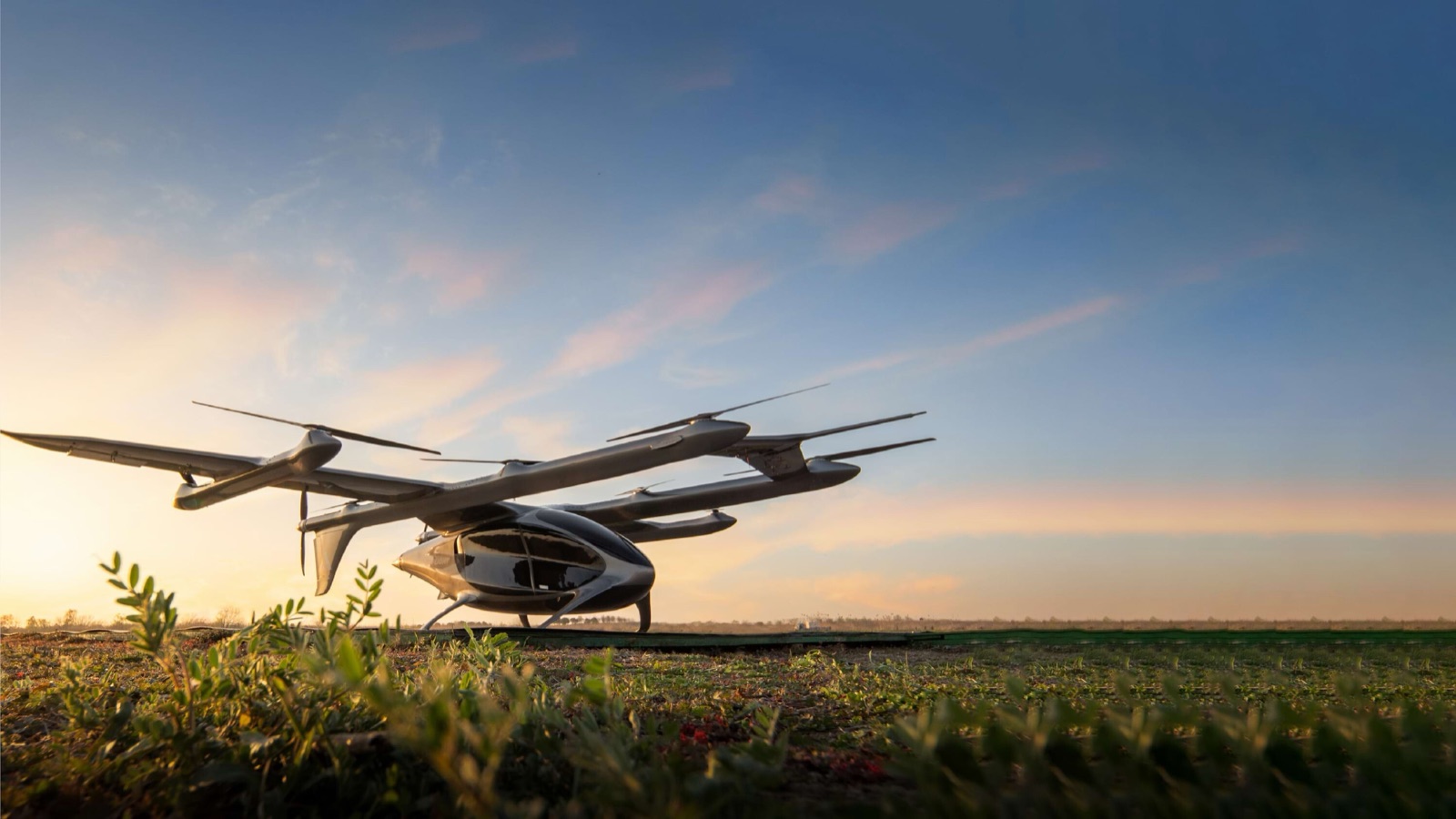
The aircraft behind the order, the V2000CG CarryAll, is AutoFlight's ton-class eVTOL. For the company the significance is not only the quantity but the fact that it enters a customer's fleet as a standardized financial asset for the first time — a shift from selling an aircraft to selling capacity that can be financed, operated and replicated at scale.
Commercialization in the low-altitude economy still depends heavily on scenarios and policy. Cargo-first applications such as logistics, emergency response and medical transport are moving fastest, while tourism and sightseeing are another path repeatedly raised. The signal from this order is that financial tools have started to arrive — and for a young industry, the moment its equipment becomes financeable often says more about its stage of development than the size of any single order.