NHTSA investigates Tesla's Cybercab: how a car with no steering wheel self-certifies
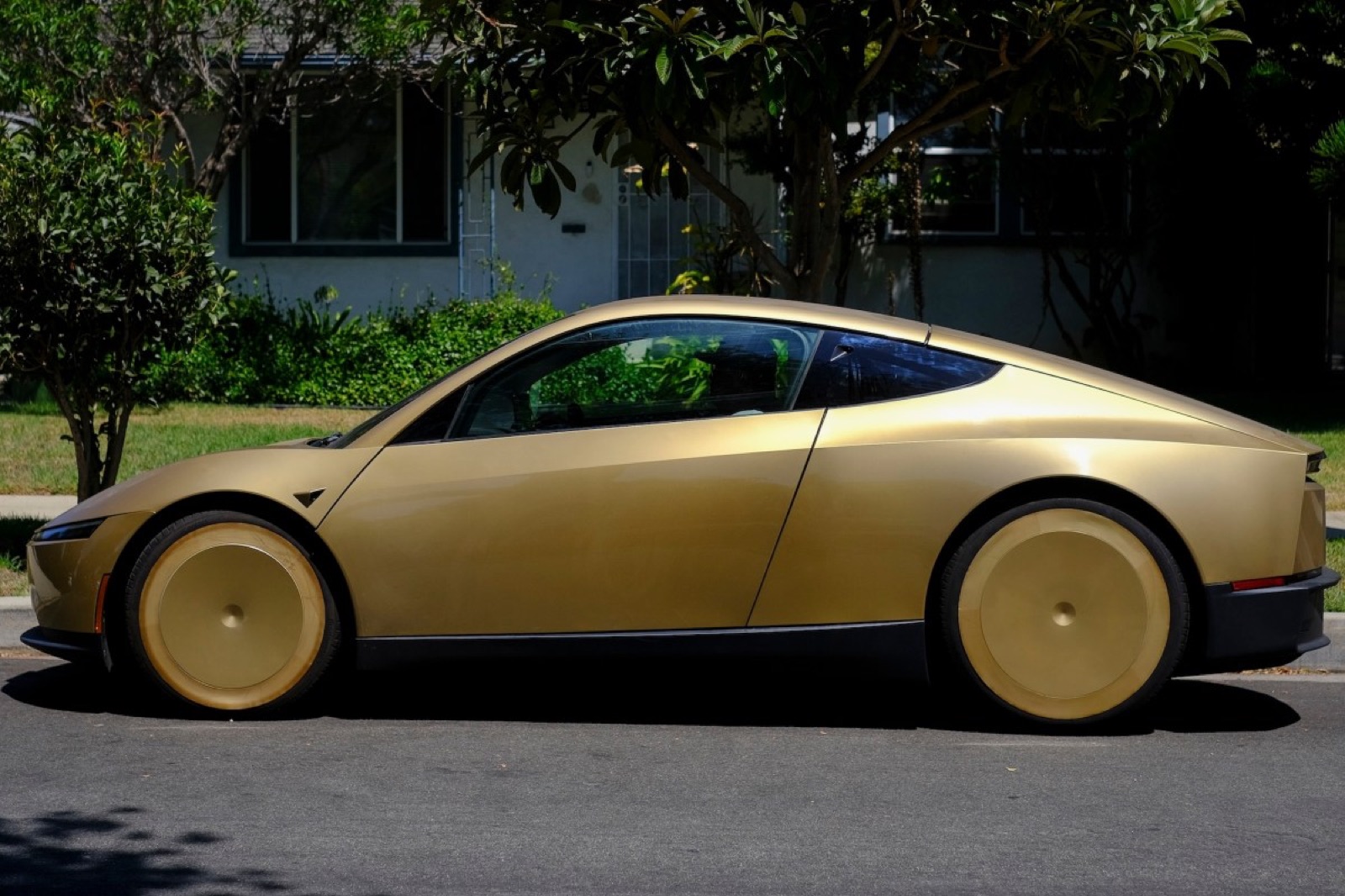
An inquiry hours after the cars hit the street
On September 4, the US National Highway Traffic Safety Administration (NHTSA) announced it had opened an investigation into Tesla's decision to launch its new Cybercab — a car with no steering wheel and no pedals — on public roads. According to TechCrunch, the probe was opened mere hours after Tesla put the first Cybercabs on the streets of Austin, Texas: the cars went live and the regulatory paperwork arrived almost simultaneously.
Federal motor vehicle safety standards have traditionally required manual controls such as a brake pedal, because those standards were originally written for cars with a driver: mirrors, steering, pedals — every clause presupposes a person inside. The Department of Transportation had, however, already proposed removing those requirements for vehicles designed to be driven autonomously. In other words, the rules are changing — but the change is not finished.
NHTSA administrator Jonathan Morrison said in a statement that the agency fully supports the safe development and deployment of automated vehicles, but that as the federal regulator it must ensure all laws are followed. His agency's approach of balancing innovation with safety oversight, he said, will allow the United States to maintain its global leadership in AV innovation.
The statement captures the regulator's dilemma: it must clear a path for a technology its own government treats as strategic, yet cannot be seen to have lowered the bar if a crash follows. The usual approach is therefore to keep the process intact while accelerating it, and to be explicit about who carries the burden of proving compliance.
How self-certification works
In the United States, automakers traditionally self-certify: the company itself determines whether a vehicle complies with federal motor vehicle safety standards and reports that conclusion to the regulator. This is not a special arrangement for driverless cars — every model on sale goes through it. NHTSA said Tesla told the agency it had self-certified the Cybercab as compliant with all of those standards.
The filing states that the investigation was opened to examine the process and technical data on which Tesla relied when certifying the Cybercab, and related issues. The agency also said it would consider the extent to which Tesla's certification depended on determinations that certain federal motor vehicle standards are inapplicable to the Cybercab. In other words, the regulator wants to know whether a car without a steering wheel argued clause by clause that it satisfies the standards, or skipped some by declaring them inapplicable.
Self-certification does not mean the absence of regulation; it places first responsibility for proving compliance on the company while the regulator keeps the power to check afterwards and take action. An audit query is one of NHTSA's investigative tools: it requires a company to submit explanations and data, and it may eventually lead to a recall — or it may close with no action. The investigation itself is not a finding that a safety defect exists. For a company, the cost is usually not a fine but time: while an inquiry is open, expansion and financing stories carry a question mark.
There is precedent: how long it took Zoox
The agency's approach has precedent. In 2022, Amazon-owned autonomous vehicle company Zoox self-certified its cube-like robotaxi, which lacks traditional controls such as a steering wheel and pedals. NHTSA then issued what it called a special order seeking more information, and formally opened an audit query the following year — the same process now being used for Tesla. Both companies faced the same body of rules and the same approving agency.
At that time Zoox was still heavily in its testing phase, and the investigation slowed its path to commercialization. Zoox had long maintained that the self-certification process was sufficient; in 2025 the agency gave the company an exemption to demonstrate — not commercially operate — its technology. Zoox then went through the official process and filed for a temporary Part 555 exemption from eight federal motor vehicle safety standards, hoping for the final approval needed to charge for rides.
In July 2026, Zoox received final approval for that exemption, eliminating one of the last remaining regulatory hurdles before commercial launch. The exemption came with limits: under the temporary approval, Zoox can add up to 2,500 vehicles per year to its commercial fleet over the next two years. Weeks later it opened its commercial service and now charges for rides in Las Vegas.
Whether Tesla will face a similarly long process is unclear. Zoox navigated that regulatory path across two administrations, and this time the rule revision itself is moving in parallel, with its pace set by legislative and administrative process rather than by any one company's wishes.
The rules are changing, but the current ones still apply
That same day, NHTSA acknowledged it is in the process of changing some parts of the standards that relate to manual controls in order to unleash American innovation and enhance safety on the roads. The agency said it looks forward to finishing those critical updates and removing unnecessary barriers to American AV innovation in the coming months — but that until that work is completed, existing standards remain in force.
That explains the apparent contradiction in the same story: on one side, a regulator publicly supports automated driving and is working to delete the barriers written for vehicles with drivers; on the other, until those changes land, a car with no steering wheel still faces the existing question of how it proves it complies. For a company this means product timing and rule timing have to be planned separately — the car can be built and put on the road first, but the final word on compliance sits in Washington.
For the industry, the real question here is not whether Tesla can put cars on the road — the cars are already operating in Austin — but whether the compliance path for products like robotaxis will be unified. A clear, predictable path benefits every company building driverless vehicles; a vague one means each of them has to probe case by case, and the cost of probing is time, which converts directly into the burn rate. Under NHTSA's process, the audit query could close without further action, or it could require a compliance fix, lead to a voluntary recall, or result in enforcement action. TechCrunch's report was written by Sean O'Kane and Kirsten Korosec, both long-time trackers of Tesla and of autonomous-vehicle regulation, and it cautions that the existence of an investigation is not itself proof that the vehicle has a safety defect; the final word belongs to NHTSA's formal filings rather than to headlines.