MIIT releases its 15th Five-Year Plan and two mandatory standards: a timetable and a safety floor for automated driving
From 1.367 million to 16.49 million: a plan aimed at 2030
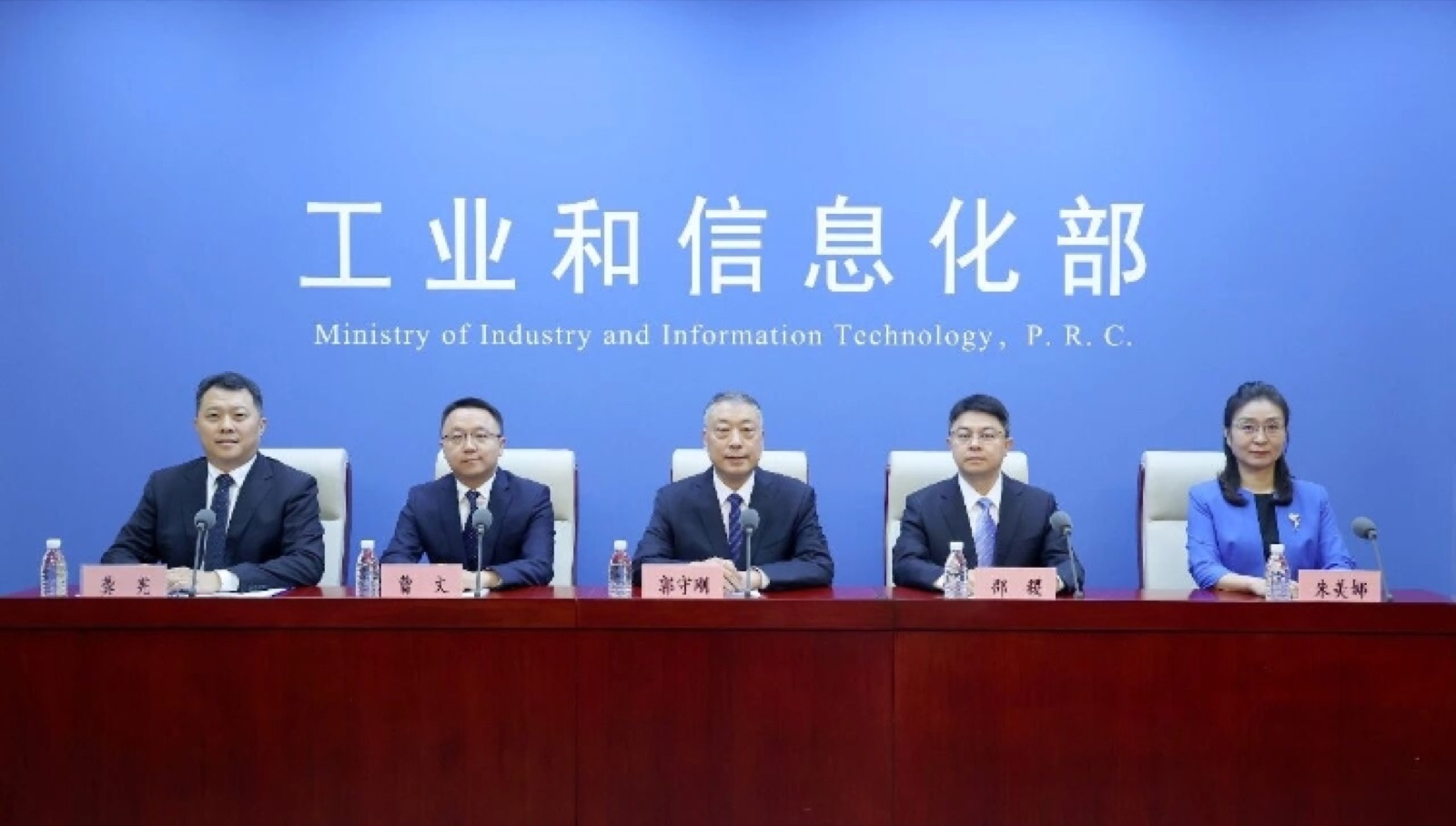
On September 11, China's Ministry of Industry and Information Technology (MIIT) held a press conference on the high-quality development of the country's intelligent connected new-energy vehicle industry. Guo Shougang, director-general of MIIT's First Department of Equipment Industry; Shao Ji, deputy director-general of the Industrial Development Department of the National Development and Reform Commission; Cao Wen, deputy director-general of the Department of Cooperation of the Ministry of Commerce; and Zhu Meina, deputy director-general of the Standards Technology Management Department of the State Administration for Market Regulation attended and took questions. The briefing was moderated by Gong Xian, MIIT spokesperson and deputy director of its General Office. The heaviest item on the agenda was the release of the 15th Five-Year Plan for the Development of the Intelligent Connected New-Energy Vehicle Industry.
Guo opened with the scorecard for the 14th Five-Year Plan period: whole-vehicle integration, power batteries, smart cockpits and lidar have reached the global front rank, and combined driving assistance has spread into mass use; China produces more than 70% of the world's new-energy vehicles, power batteries and key materials, and five NEV makers and six battery makers rank among the global top ten by sales. From 2020 to 2025, annual NEV sales rose from 1.367 million to 16.49 million units, a 65% compound annual growth rate, while the take-up rate of combined driving assistance in domestic passenger cars climbed from 16.2% to 64.9%. Complete vehicles and components now ship to more than 100 countries and regions.
The problems were put on the table too: protectionism and unilateralism are rising abroad and trade barriers have clearly multiplied, while irrational competition at home remains prominent — and, in Guo's words, "some incidents involving vehicle quality and automated-driving safety have occurred recently." All of this, he said, requires careful study and response. That diagnosis is the problem statement behind the new plan.
The plan sets four directions: green, intelligent, high-end and international. On the green side, it calls for continued revision of vehicle energy-consumption standards, optimization of the dual-credit policy, exploratory management of vehicle carbon emissions and power-battery carbon footprints, and faster creation of a digital identity system for power batteries, alongside trade-in programmes, NEV sales in rural areas, pilot projects to shore up county-level charging infrastructure and full county coverage of charging stations and piles. On the intelligent side, it deepens the intelligent connected vehicle market-access and road-operation pilots and the vehicle-road-cloud integration pilots, optimizes the production access regime, promotes trusted data spaces and high-quality datasets, supports automakers in reinforcing each other with the ICT, energy and transport industries, and pushes deep convergence between AI and the auto industry. On the high-end side, it backs leading firms in technical攻关 — stepping up battery cold-weather adaptability and durability, and improving the sophistication, safety and reliability of driving assistance and automated driving — while tightening innovation-design access review, testing and validation management and production-consistency supervision. On the international side, it calls for using bilateral and multilateral mechanisms, deep participation in international standards work, mutual recognition between domestic standards and global regulations, and better cross-border logistics and financing support.
What can actually be measured is the "1+4" goal structure for 2030. The overall goal is to use five years to further consolidate the whole supply chain's advantages: new-energy passenger vehicles and commercial vehicles are to account for 70% and 40% of new sales in their respective segments, and cars with automated-driving functions are to enter large-scale use.
The four sub-goals are just as concrete. On technology, by 2030 average fuel consumption for passenger cars and average electricity consumption for battery-electric passenger cars should reach about 3.3 litres and 11.5 kilowatt-hours per 100 kilometres respectively, and highly automated driving products should be in use on highways, urban expressways and some city roads. On industrial structure, the aim is to lift output per worker by 15% versus 2025 and to cultivate globally competitive vehicle and component makers. On internationalization, the goal is steadily stronger overseas operating capability, a well-regarded Chinese auto brand abroad and active participation in international regulatory and standards work. On economic and social benefits, the plan seeks a more pronounced pillar role for the auto industry in the national economy, an early carbon peak and a large improvement in the safety performance of vehicles equipped with automated driving.
The delivery mechanism is 17 key tasks, four major engineering programmes and three focused campaigns. The engineering programmes cover key technology development, standards and testing capability, a safety foundation programme and an internationalization capability leap; the safety programme explicitly calls for stronger functional safety, cybersecurity and data security management systems and for a safety monitoring platform. The three campaigns are "AI plus automobiles," key-component ecosystem building and leading-enterprise cultivation, and application promotion for intelligent connected new-energy vehicles — the last aimed squarely at scaling automated driving, vehicle-road-cloud integration and new-energy heavy trucks.
Two mandatory standards: a safety floor written into national regulation for the first time
At the briefing, Zhu Meina, deputy director-general of the standards department at the State Administration for Market Regulation, took the question on mandatory national standards. She pointed to two recently issued mandatory national standards for intelligent connected vehicles. Safety Requirements for Automated Driving Systems of Intelligent Connected Vehicles focuses on the functional boundaries and operational design domain of automated driving systems, setting requirements for the system's ability to perform the dynamic driving task, for safety in carrying out that task across scenarios, and for human-machine interaction and user notification. Safety Requirements for Combined Driving Assistance Systems of Intelligent Connected Vehicles centres on combined driving assistance, covering functional requirements, data recording, manufacturer safety assurance, human-machine interaction, instructions for use and user training.
In her telling, the two standards for the first time draw a safety floor for automated driving systems and combined driving assistance systems at the level of mandatory national standards. She summarized the significance in three parts: unifying corporate R&D and production requirements, standardizing feature naming and marketing claims, and making inspection, testing and quality supervision more consistent; guiding consumers to correctly understand system capabilities and limits and reducing misuse; and promoting fair competition and innovation so that driving automation is applied safely, steadily and in an orderly way. She also laid out the standardization sequence: beyond advanced driving assistance, automated driving, information security and connectivity, the work will extend into automotive AI, automotive software and automotive data, with mandatory standards for parking assistance, automated parking, automotive data security and safety-event data exchange and management prioritized next.
The market-access side is worth recording as well. Guo said Level 2 combined driving assistance has already achieved mass installation worldwide, while Level 3 and Level 4 innovation and testing are accelerating; in the first half of this year, the take-up rate of Level 2 combined driving assistance in newly sold Chinese passenger cars exceeded 70%. Building on existing vehicle production access rules and with technical standards as a key support, MIIT has been assembling a management framework for driving assistance and automated driving covering corporate safety assurance, product process assurance, product testing and validation, and in-service vehicle monitoring. Drawing on the intelligent connected vehicle access and road-operation pilot, it has drafted management plans and guidance and assembled expert teams at several levels.
What comes next splits into three tracks: strengthen standards development and implementation, including wider explanation of the driving-assistance and automated-driving standards, drafting implementation guides and faster testing capability building; steadily advance the access pilot, continuing intelligent connected vehicle production access and road-operation pilots while cautiously extending scenarios such as highway pilot, automated parking and logistics delivery; and tighten safety evaluation and supervision across policy and standards, corporate safety assurance, product process assurance, testing and oversight, alongside a coordinated push to build a safety management platform for intelligent connected new-energy vehicles. "We will always put safety first," Guo said.
Exports, convergence and governance: the numbers and the constraints
Industrial convergence was the other main thread. Guo split vehicle-energy-road-cloud integration into three layers. With ICT, the aim is scaled deployment of 5G, 5G-A and C-V2X direct communication, mass installation of satellite-direct and BeiDou technologies and better coordinated layouts of multiple compute infrastructure types. With transport and cities, it means digital upgrades to traffic lights, signs and markings, scaled roadside sensing deployment tailored to local conditions, connected cross-industry information platforms and faster adoption of automated urban logistics and smart passenger services. With energy, it means a stronger charging and battery-swap network, well-planned high-power charging, faster scaling of vehicle-to-grid interaction and wider use of new-energy heavy trucks in trunk logistics and short-haul transport.
On internationalization, Cao Wen, deputy director-general of the Ministry of Commerce's Department of Cooperation, gave the numbers: China's vehicle exports reached 8.32 million units in 2025, a record high; Chinese vehicles have been sold to more than 200 countries and regions, and Chinese companies have invested in vehicle and component manufacturing in more than 80 countries and regions; in the first half of 2026, new-energy vehicles made up more than 40% of China's vehicle exports by volume. He also noted that the Ministry of Commerce, together with MIIT and the State Administration for Market Regulation, recently issued Guidelines on Overseas Competition Behaviour and Compliance Building for the Automotive Industry — the first compliance guide aimed specifically at Chinese automakers operating abroad.
On irrational competition, Guo used the word "chronic illness." MIIT, he said, has worked with other departments on a regulatory work plan, set up an industry consultation mechanism and tackled payment terms for suppliers, production-consistency supervision, online disorder and site visits to key firms. Results are visible: corporate behaviour is more rational, online mud-slinging and public spats have been initially curbed, supplier payment terms have improved and competitive order is returning to reason. Because the problem is stubborn and complex, the next steps are to keep cleaning up online disorder, guide new-model launches and product reviews, press automakers that effectively extend payment terms to rectify, and run a special campaign to upgrade automotive standards.
Paired with the anti-involution drive is a quality campaign. Four departments recently issued a joint notice on production consistency and quality improvement for road motor vehicles, organizing self-inspection around four categories of problems: production consistency, reliability, durability and validation of new technologies. MIIT and other departments have run on-site inspections at more than a dozen major car and motorcycle makers and six testing institutions, taking vehicle and battery samples at random for testing, and publicly named two batches of production-consistency cases covering 31 automakers. Guo added that a notice on strengthening management of automotive product innovation design and R&D testing and validation is being drafted, aimed at keeping unreasonable innovation designs and insufficiently validated products off the market, along with faster revision of standards for reliability and environmental adaptability.
The doubts deserve a place too. This was a briefing about a five-year plan: 70% and 40% are targets, not commitments, and whether the two mandatory standards become a hard gate for product access depends on implementation guides, the capability of testing bodies and consistency in enforcement. The briefing also acknowledged that vehicle-quality and automated-driving safety incidents have indeed happened recently, which means regulators will be calibrating between encouraging innovation and holding a safety floor for a long time to come — a more honest picture of the industry than any single number.