Pony.ai and Verne start fully driverless Robotaxi rides with passengers in Zagreb — a European first
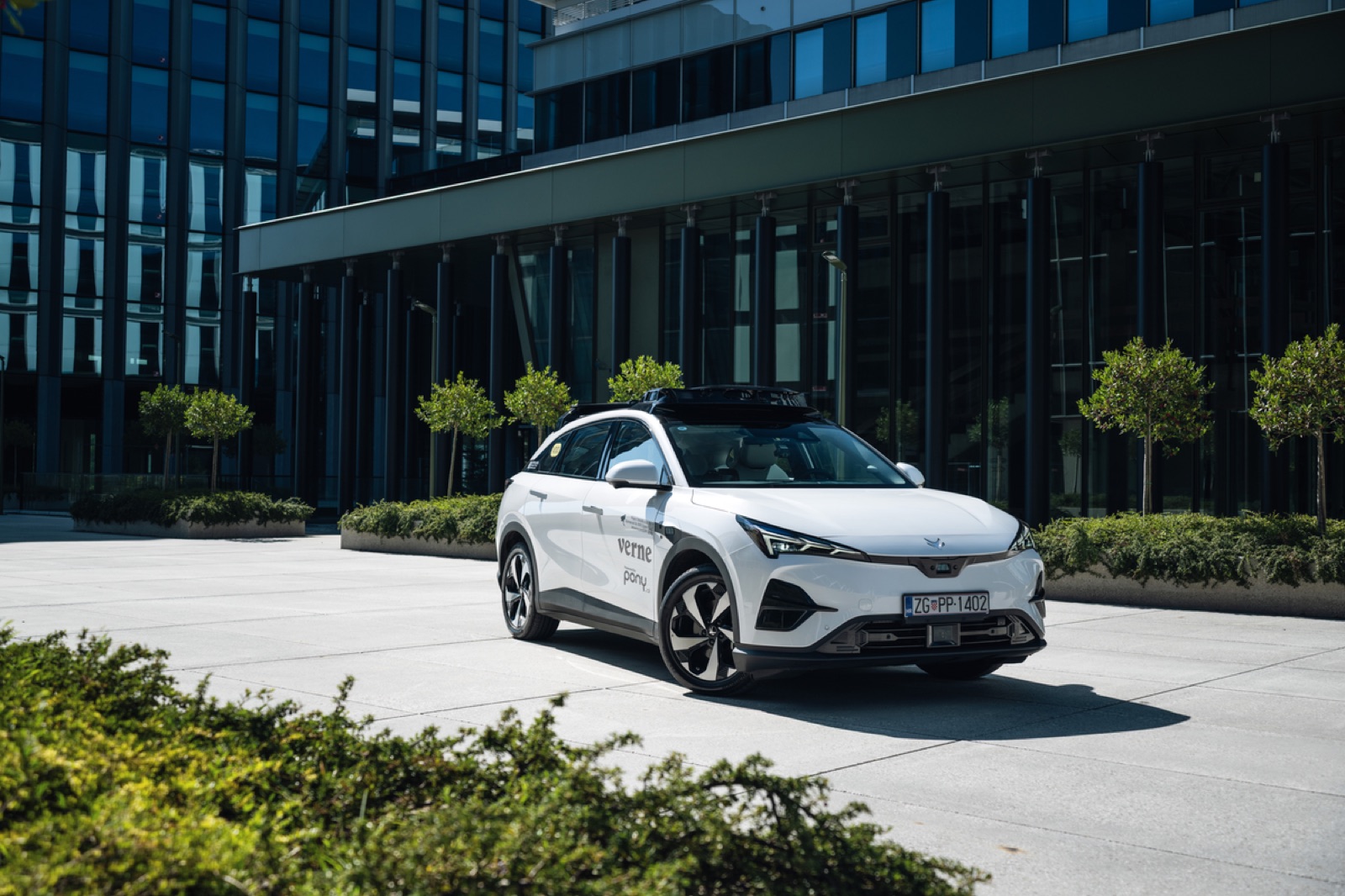
A 22-kilometer route, a European first
On September 10, Pony AI Inc. (NASDAQ: PONY; HKEX: 2026) and Verne announced the start of fully driverless Robotaxi test rides with passengers on public roads in Zagreb, Croatia — a European first. The companies described it as a significant step toward fully driverless commercial operations. Fully driverless here means no safety operator in the car: the vehicle completes the trip on its own, and the passenger is the only person on board.
The test route runs 22 kilometers, linking Verne's headquarters and one of Zagreb's main business districts with Franjo Tuđman Airport. Choosing an airport line is no accident: airport transfers are among the most standardized trips a city has — fixed routes, predictable timings and passengers who are less price-sensitive — which makes them a natural first productized scenario for autonomous service. The fully driverless routes will be expanded further in the coming months, the companies said, with the aim of covering the whole operating area in Zagreb.
The milestone comes just over five months after Pony.ai, Verne and Uber announced a partnership to launch Europe's first commercial Robotaxi service. The pace has been tight: commercial operations with an onboard safety operator first, to bed in the process with real passengers and real roads, then removing the operator. For any driverless company that step is more than a technical question — the operations team, regulatory dialogue and emergency procedures all have to hold up at the same time.
How the joint deployment model splits the work
The division of labor is three-way: Pony.ai provides the autonomous driving technology, Verne leads service operations, and Uber offers access to the service through its platform. This is what Pony.ai calls its joint deployment model — the mix of partners can vary by market, supporting a more capital-efficient path to scale. Doing it the other way, keeping fleets, operations and demand generation in-house, takes far more capital and far heavier local teams.
The operating numbers suggest the model is already running. Since the Verne-operated service launched in early April, the fleet has logged more than 200,000 kilometers, completed several thousand customer rides and achieved an average passenger rating of 4.7 out of 5. The volumes are still small, but they answer a key question: whether this technology stack combined with local operations can deliver a stable service in another country's cities and traffic.
Moving from commercial operations with an onboard operator to fully driverless testing is an important step for both companies. They said it demonstrates Pony.ai's ability to apply technology and operating experience from its fully driverless commercial services in China to real-world deployment in Europe, supported by Verne's operational readiness and its work to meet regulatory requirements. Put another way, it is a joining of two capabilities: an autonomous driving system validated at scale, and an operator that understands local rules and passenger habits.
Pony.ai founder and CEO James Peng said fully driverless passenger rides in Zagreb mark an important step in the company's international growth, and that together with Verne the two are demonstrating how Pony.ai's Virtual Driver can combine with Verne's local operating and passenger-service capabilities to support a scalable path to commercialization. Progress in Zagreb, he said, provides a strong foundation for expanding fully driverless mobility across Europe and other international markets.
Verne CEO Marko Pejković said that five months after launching Europe's first commercial Robotaxi service, the company is taking the next step, moving from autonomous driving with an onboard operator toward fully driverless operations — a major milestone on the path to scaling autonomous mobility in Europe. For a team that has been deploying autonomous ride-hailing in Europe since 2019, the key word in that sentence is scale: the service has to be replicable across more cities rather than staying a single showcase route.
The seventh-generation Robotaxi and its safety architecture
The test rides use Pony.ai's seventh-generation Robotaxi, powered by a Pony.ai-developed L4 domain controller built on NVIDIA DRIVE AGX and running the safety-certified Halos OS. A domain controller is effectively the brain board of a driverless car: it processes multiple sensor streams at once, runs the driving model and sends control commands to the chassis, which is why it needs automotive-grade compute, power budgets and safety certification.
The company says the vehicle's safety architecture combines 360-degree sensor coverage with multiple layers of redundancy and fail-operational capability — meaning that when one part fails, the system can still keep operating safely rather than dropping out immediately. That architecture has been validated through fully driverless commercial operations in major Chinese cities, in complex traffic and adverse weather.
Pony.ai currently operates fully driverless commercial services in four major Chinese cities and has logged more than 100 million kilometers of autonomous operations worldwide, including over 40 million kilometers in fully driverless mode. The fully driverless rides in Zagreb are conducted in accordance with applicable Croatian regulations and the approvals required for passenger-carrying autonomous vehicle testing on public roads. The two figures are more meaningful together: only 40 percent of that 100 million kilometers was fully driverless, and it is precisely that share which underpins replication abroad.
The dual-engine strategy and the overseas pipeline
The news is also part of Pony.ai's dual-engine growth strategy, under which it scales its Robotaxi business in both China and international markets. Overseas it expands through the joint deployment model, which brings together autonomous driving technology, access to rider demand and day-to-day fleet operations. For a technology company, the advantage of that structure is leaving the heaviest assets and the most local work to partners while focusing itself on algorithms and the safety system.
Recent partnerships have expanded the overseas deployment pipeline to more than 4,000 Robotaxis, including plans with Uber to deploy more than 2,000 vehicles across Europe. Pony.ai is targeting a global fleet of more than 3,500 Robotaxis by the end of 2026, with operations spanning more than 20 cities worldwide. There is usually a visible gap between pipeline and deployment — vehicles must be built, registered and matched with an operator, and all of that moves on a quarterly rhythm.
Verne takes its name from Jules Verne. Since 2019 the company has worked on deploying autonomous ride-hailing in complex urban environments through operations, integration and regulatory enablement, work that led to the launch of Europe's first robotaxi service in April 2026. It describes itself as building the operational layer for autonomous mobility — designing not only how autonomy works, but how it feels to use. For Europe, that division of labor may be exactly the missing piece: technology can be imported, but operations and compliance have to be explained locally.