Zoox's 100-vehicle Nevada cap expires: the robotaxi race in Las Vegas
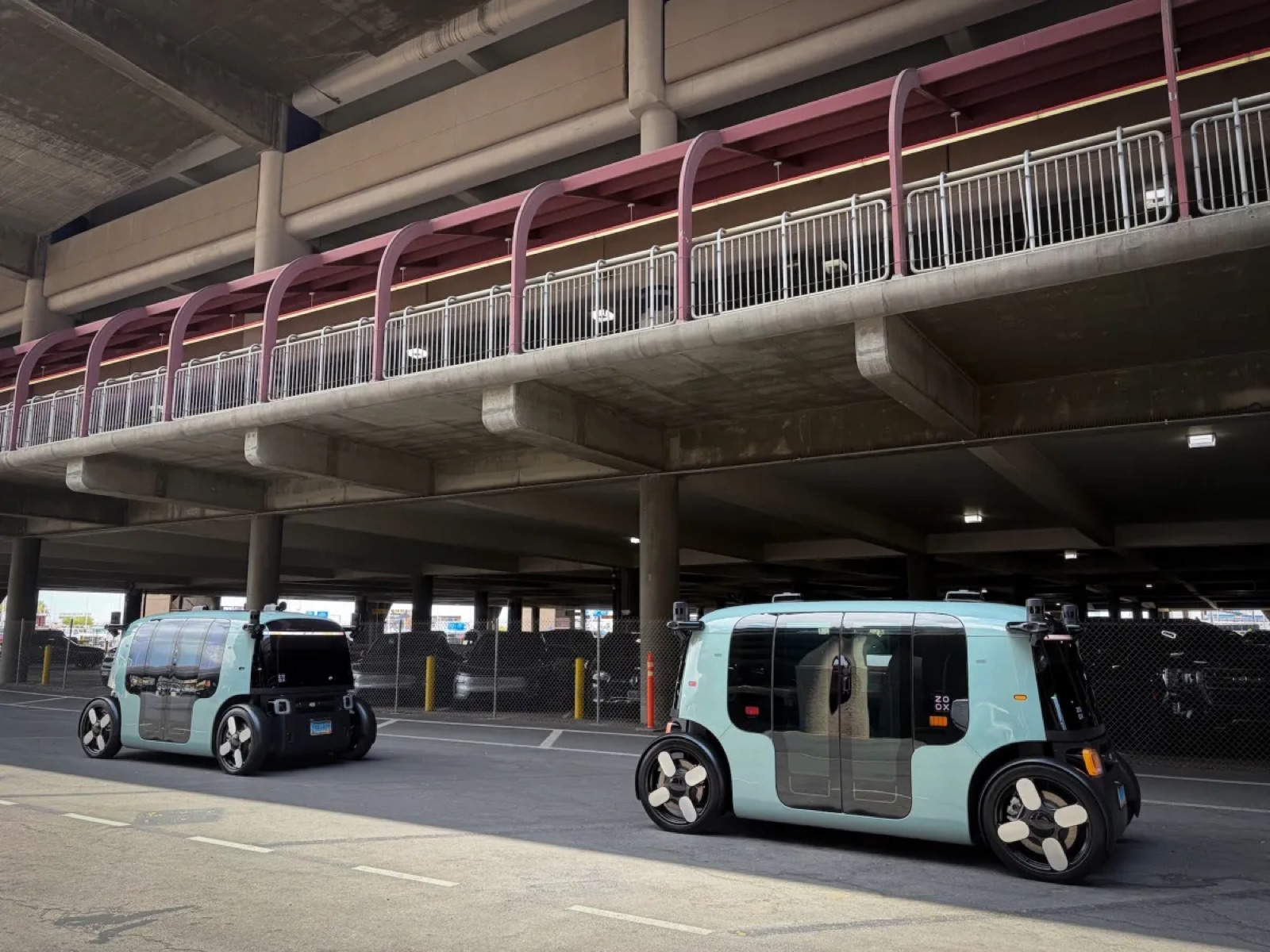
The 100-vehicle limit expires on September 25
Nevada's permit for Zoox carries a limit on fleet size: for the first 12 months, no more than 100 robotaxis may operate in the state. That restriction is set to expire on September 25. TechCrunch confirmed the change with an official at the Nevada Transportation Authority (NTA) and a Zoox spokesperson, and the terms also appear in an updated version of the permit.
For the Amazon-owned Zoox, that means more freedom to grow its commercial fleet in Las Vegas: the fleet is no longer pinned to a hard-coded number, and the change lands just as competition heats up. One caveat first — the cap's expiry does not mean Las Vegas is about to be inundated with hundreds of Zoox vehicles. What disappears is a ceiling, not a signal to floor it.
Zoox has about 100 custom-built robotaxis today. They are cube-like vehicles with no steering wheel and no pedals, spread across four U.S. cities including Austin and Miami, with the bulk of the fleet in Las Vegas and San Francisco. So far Las Vegas is still the only city where Zoox charges riders; to charge passengers in California it must first obtain another permit from state regulators.
A federal exemption comes first, then charging
Zoox only began charging for rides in Las Vegas last month, and that start had a precondition: a temporary exemption from certain federal motor vehicle safety standards, issued by the National Highway Traffic Safety Administration (NHTSA). The exemption matters especially to Zoox because its path differs from Waymo's — Zoox's robotaxis were designed without steering wheels, pedals or the other traditional controls that federal rules require.
A piece of general industry context is worth unpacking here. Federal motor vehicle safety standards were written for cars with a driver: steering wheels, pedals, mirrors, defrosting and defogging all presume that someone is sitting in the vehicle. A model that removes manual controls therefore cannot be certified through the ordinary route; it needs exemptions, standard by standard, or later legislation that opens a dedicated path for such vehicles. An exemption is both an exception granted by the regulator and a risk agreement with the manufacturer: drive first, and hand the operating data back.
The commercial exemption Zoox received allows it to deploy up to 2,500 vehicles per year for the next two years. That figure and the 100-vehicle cap in the Nevada permit sit on two different levels: the former is a federal allowance for vehicles that cannot fully comply, the latter is state-level control over the size of a trial operation.
Zoox has put no number on the pace of expansion. A spokesperson declined to say how many robotaxis the company plans to add to its Las Vegas fleet, or even how many are operating there today. Robotaxi Tracker, which collects data on autonomous vehicles, estimates that Zoox has more than 30 vehicles operating in the city. The spokesperson said only that Zoox plans to steadily increase the size of its fleet over the next several months to meet the high demand in Las Vegas and other markets.
Three new players get permits in the same month
However fast Zoox expands, it will have plenty of company. In August, the NTA approved three permits allowing Tesla, Uber and Waymo to run commercial robotaxi services in Clark County, which includes Las Vegas. Together, the permits could bring up to 7,000 robotaxis to the area over the next 12 months. The scale of robotaxis in a city ends up written into permit documents.
Waymo wasted little time. Earlier this month it opened its robotaxi service to customers in Las Vegas. Waymo told TechCrunch at the time that it would start with “dozens” of its new Ojai minivans in a 23-square-mile area that includes the Strip south of Highway 589 and extends into Boulder Junction.
Several operators in one city means, most directly, choice and price competition for riders. For regulators it means that different technical approaches can be compared on the same roads and with the same passengers. That is also why state and county agencies have started counting vehicles, miles and incidents more carefully: where several operators coexist, regulatory decisions lean on comparable data rather than each company's own account.
Beyond the cap: what really constrains expansion
Looking back at the rule of 100 vehicles in the first 12 months, the intent is not hard to read. Facing a new technology, a regulator worries less about whether it works than about uncontrolled exposure: at a hundred vehicles, a problem remains investigable and reversible; at several thousand, a single systemic defect can become a public event. Put a capped fleet into real traffic first, collect miles, disengagements and crash data, then decide whether to open up — that is the standard pattern for trial-operation regulation.
The real bottleneck for a robotaxi fleet is usually not the algorithm. Vehicles have to be built one at a time, and production capacity sets the ceiling; permits are approved one at a time, and the administrative pace sets the order; where cars park, charge and get serviced depends on depots and power rather than smarter models; and once recovery, incident handling and customer support all need people, the size of the remote-assistance team becomes another hidden ceiling. If any one of those links lags, the fleet cannot grow.
So the most restrained reading of the cap's expiry is this: Zoox gains permitted room to expand, but it is still a long way from thousands of vehicles in Las Vegas. Losing the 100-vehicle ceiling only means that from now on fleet size is set by Zoox's own build rate, depot construction and operating capacity, rather than by a number on a permit.
What deserves more attention is the overlap in timing. Zoox's freedom has just opened up, Waymo's paid service is already live, Tesla and Uber hold their permits, and Clark County can accommodate up to 7,000 robotaxis within 12 months. Las Vegas thus becomes an unusually clear observation window: in one real city that hosts several operators, who can roll out a fleet, who can push costs down and who can account for its regulatory data will all be visible.
For Zoox there is an extra wrinkle in the arithmetic. It sits inside the Amazon group, and its vehicles were redesigned around the premise that no driver is present: with no steering wheel there is no human takeover as a fallback, which is exactly why it must rely on the federal exemption. The exemption provides a two-year window, and the cap's expiry provides room inside the state; together they mean the period ahead is when the company has to prove out the combination of a purpose-built vehicle and paid commercial service.
One more point is easy to miss: Zoox charges only in Las Vegas today, and San Francisco, though home to a large part of the fleet, still requires another permit from California regulators before passengers can be charged there. In other words, a company's commercial expansion is not decided by a single rule but by the allowances granted at each layer — federal exemption, state permit, county quota and city operating capacity. If any layer stalls, fleet size stops at that layer's limit. Nevada's 100 vehicles is simply the first to expire.