Google's "magic state cultivation": cutting the error of quantum computing's costliest step roughly 40-fold
A bottleneck researchers have seen coming for 20 years
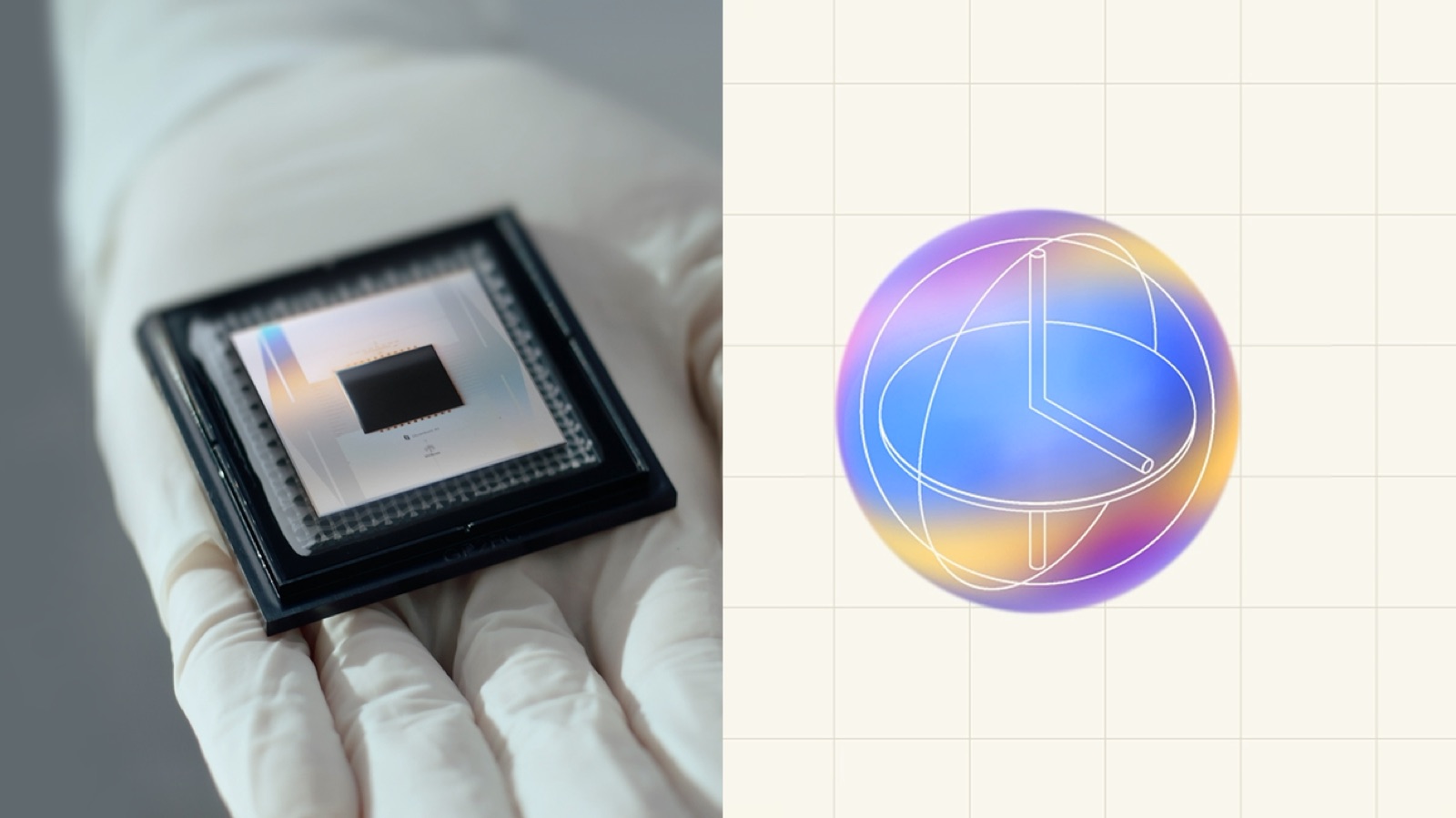
On 15 October Google Quantum AI announced a paper in Science reporting the first experimental demonstration of "magic state cultivation" on its Willow processor: magic-state preparation errors fell roughly 40-fold compared with uncultivated states, and the cultivated T states reached a record 99.99% logical fidelity. The company frames it as a step towards scalable quantum computing, not the destination.
"Magic states" sound mystical but point at a concrete engineering problem. To run arbitrary programs, a quantum computer needs more than error-corrected logical qubits: it must perform a special class of operations, the T gate being the canonical example. Those are hard to execute accurately enough directly, so the standard approach is to prepare a special resource state — a magic state — and consume it to enact the operation.
The trouble is that making high-quality, error-corrected magic states is enormously resource-hungry. Google's blog notes estimates that as much as 95% of a quantum computer's entire capacity might be needed just to produce them, leaving little room for actual computation; worse, a magic state cannot be reused once consumed. Researchers saw this bottleneck coming as far back as 2004, and for twenty years they have been grinding that cost down.
"Cultivation" is really a filter
In 2024 Craig Gidney, Noah Shutty and Cody Jones at Google Quantum AI took an idea from the literature, refined it and produced what is now called magic state cultivation. The idea works like a filter: inject a noisy state into a small region of the chip, run a series of highly coordinated measurements that check for errors and discard flawed attempts, and let the surviving state be "cultivated" into an exceptionally pure, low-error one that is simultaneously adapted into a larger, more useful encoding.
On paper it looked great, but making it work on real hardware required a whole series of technical innovations and engineering. What the paper demonstrates is an end-to-end chain: prepare a noisy candidate magic state, run error-detecting measurements inside a small colour-code region, post-select by discarding runs where faults were detected, then "graft" the cultivated state into a larger surface-code logical qubit and characterise the result fault-tolerantly.
The grafting step is what was demonstrated on hardware for the first time: colour codes suit this kind of purification, while fault-tolerant computing more commonly uses surface codes. The experiment transferred a state from a distance-3 colour code to a distance-5 surface code, showing that a purified state can survive and move smoothly inside the machine. That turned the protocol from a 2024 theory paper into an experimental procedure that can be run repeatedly.
Data that seemed to defy the laws of physics
There is a story behind the paper worth telling on its own. When the team first tested the cultivation protocol, research scientist Emma Rosenfeld saw data that appeared to defy the laws of physics. After months of confusion, simulation, discussion and consistency checks, she traced it to an incorrect assumption in the team's go-to measurement technique: low-frequency noise from electrical equipment drift and temperature variation in the lab was undermining the validity of the benchmark. The fix went both ways — add extra control to the system to reduce that noise, and invent a new benchmarking technique that solved the problem more fundamentally by using cultivation to measure itself.
The episode is itself typical of quantum computing engineering. In such systems drift, crosstalk and environmental noise readily masquerade as physical anomalies, turning a measurement flaw into an apparent law of nature; recognising that the instrument's assumption is wrong rather than nature often matters more than a few more data points. Google says the work established a new state of the art in quantum metrology.
The boundaries deserve equal clarity. This is not a general-purpose fault-tolerant quantum computer. Google states plainly that cultivation still has to be demonstrated at a larger scale before it becomes realistic for practical quantum computing, and that plenty of technical challenges remain. "Forty-fold fewer errors" describes the lower error of the cultivated state; it does not mean a 40-times cheaper machine, and it does not establish the yield or throughput a practical algorithm would need.
Where this step sits on the board
In recent years quantum computing news has clustered around two measures: the number of physical qubits, and whether a system can operate "below threshold" — that is, whether error rates fall as code distance grows instead of rising. Those efforts answer whether logical qubits can exist and become more reliable. But running arbitrary algorithms also requires a mechanism that reliably supplies non-Clifford operations, and magic states are that mechanism's raw material.
That is why Google calls this opening a key bottleneck. If the cost of producing magic states can be pushed down substantially, the estimates of physical qubits and operations required for a target algorithm have to be recomputed, and the size and schedule of fault-tolerant machines may loosen accordingly. The company's claim is that this is the first practical solution to one of the field's most severe resource bottlenecks, demonstrated on real hardware.
Put the timescale back into perspective and several gates remain: whether the protocol keeps its gains on larger systems that are more exposed to noise; what the total resource cost per step and the success rate per usable state turn out to be; and how much the approach saves inside a complete machine compared with conventional magic-state distillation. Google's wording is restrained — it still needs larger-scale demonstration — and that sentence is the key to weighing the result.
Methodologically there is a transferable lesson too: when a team's data "violates physics", the first move is not to revise the theory but to suspect the measurement. Low-frequency noise and environmental drift are almost ubiquitous systematics in precision experiments, and identifying them and designing a benchmark that can check itself is a capability in its own right.
Read together, the 2024 theory paper and the 2026 hardware experiment span two years, from "looks great on paper" to "runs on a real chip", with algorithmic innovation and engineering detail filling the gap. For progress like this, the most useful yardstick is not how striking a single demonstration's numbers are, but how much it shortens the road to a useful, error-corrected quantum computer. Magic state cultivation has made the costliest stop on that road cheaper; several stops remain.