The 2026 Nobel Prize in Physics: turning Antarctic ice into a neutrino observatory
Using Antarctic ice as a detector
On 6 October the Royal Swedish Academy of Sciences awarded the 2026 Nobel Prize in Physics to Francis Halzen of the University of Wisconsin–Madison "for decisive contributions to the IceCube Neutrino Observatory and the discovery of high-energy neutrinos of astrophysical origin". The prize is 12 million Swedish kronor, and he receives it alone.
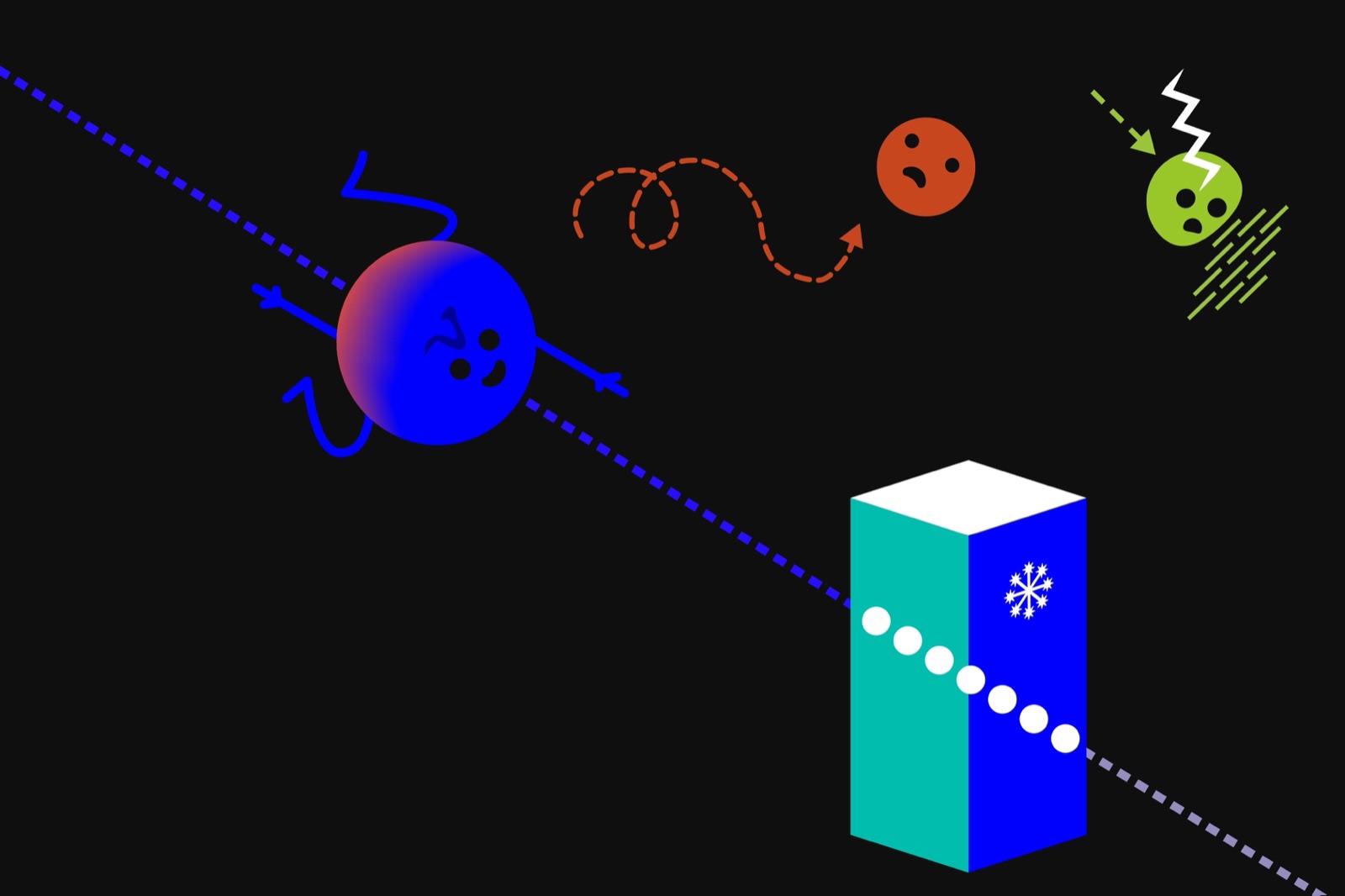
What are neutrinos? They are among the most abundant particles in the universe: nuclear reactions inside the Sun, supernova explosions and cascades triggered by cosmic rays in Earth's atmosphere all produce them continuously. They are everywhere yet barely make themselves known — they pass all the way through the Earth and through our bodies without us noticing. The reason is that they take part almost only in the weak interaction and rarely collide with matter. Only very rarely does one interact with an atomic nucleus, and that is what gives someone with the right equipment a chance to detect it — a chance that has to be accumulated with an enormous detector volume. When such a collision happens it produces a flash of light, and that light can be tracked by sensors embedded in clear glacial ice.
Halzen's idea was to track neutrinos using ice at the South Pole, and he first presented it in 1988. The advantages of that ice are practical: the ice is clear, and deep ice in particular is dark and quiet, far from other cosmic-ray signals; the area is also geologically stable, with no earthquakes, so a detector can keep running in the same place for years. The idea soon gained support from other researchers, and a few years later preliminary testing of sensors in ice was under way.
Why a cubic kilometre? Cosmic neutrinos of extremely high energy are very rare, so observing an adequate number of collisions requires an enormous volume of ice. IceCube covers an entire cubic kilometre and was completed in 2011. Not long after, researchers found the first high-energy neutrinos.
Why neutrinos make good messengers
Scientists have long known that the cosmos contains natural particle accelerators, capable of firing out particles with energies up to a million times greater than laboratories on Earth can achieve. But much about these sources is mysterious: what are they, where are they, and what are the main processes inside them? Those questions have long resisted conventional observation.
Extremely high-energy neutrinos are created in the same environments as other particles, but the charged parent particles are deflected by cosmic magnetic fields, erasing their directional information en route. Neutrinos are uncharged and barely interact with matter, so they reach us without changing direction or losing energy — which means they can provide information that is not available in any other way, pointing straight back towards the accelerator that made them. That is the whole case for treating neutrinos as messengers.
The approach has delivered: soon after IceCube was completed researchers discovered the first high-energy neutrinos, and a few years later they published the discovery of neutrinos that must originate far outside our solar system. The search for the universe's neutrino sources could then begin in earnest.
In the words of Mark Pearce, chair of the Nobel Committee for Physics: "Francis Halzen has led an international team of researchers and engineers who have provided us with a fantastic instrument. His tenacity and scientific vision has paved the way for a new kind of astronomy."
An instrument, and a new kind of astronomy
IceCube is essentially one instrument: a cubic kilometre of ice, plus an array of light sensors deployed within it. Building it depended on an international team of researchers and engineers. Halzen's biography is simple: born in 1944 in Tienen, Belgium; PhD in 1969 from KU Leuven; professor at the University of Wisconsin–Madison.
How does it "see"? When a neutrino interacts with a nucleus in the ice, the resulting charged particles leave Cherenkov light behind; the sensor array records when and where that light arrives, and from that the event's direction and energy are reconstructed. Volume is what matters because the probability of a neutrino colliding is so low — the bigger the detector, the more signals it can catch. That makes IceCube both an astronomy instrument and a particle physics instrument: what it produces is not an image through a telescope but a growing tally of interaction events.
The work is not finished. Officially, the neutrino interactions IceCube collects continuously will keep giving researchers new knowledge about the violent settings in which high-energy neutrinos are created, and could even reveal previously unknown cosmic phenomena. In other words, the prize recognises a facility that is still running and still producing data.
Three faces of the 2026 science prizes
Six prizes and ten laureates were recognised in 2026, with the official summary describing achievements that range from optogenetics to efforts to promote peace and international law. The three science prizes were announced in sequence: the prize in Physiology or Medicine went jointly to Karl Deisseroth, Peter Hegemann and Georg Nagel "for their discoveries concerning light-gated ion channels and optogenetics"; the physics prize went to Francis Halzen, as described above; and the chemistry prize went jointly to Henri B. Kagan and Kenso Soai "for the discovery of non-linear effects and autocatalysis in asymmetric organic synthesis".
Placed side by side, the three point at the same thing: build the means of observing and manipulating first, and new questions surface on their own. Optogenetics made neuronal activity switchable with light; IceCube turned a cubic kilometre of ice into a particle detector; and the two phenomena recognised in chemistry make reaction processes that were hard to pin down at the molecular level measurable and controllable. That is the most common shape of a basic-research payoff — not a single conclusion, but a tool others can use.
Back to IceCube: from the idea presented in 1988 to completion in 2011, and a Nobel more than a decade later, the timeline measures not inspiration but the engineering endurance and organisational capacity required to turn a notion into an instrument that keeps producing science — deploying sensors into Antarctic ice and then keeping them running reliably year after year is an engineering undertaking in itself. The prize recognises Halzen's decisive contribution, while the instrument itself was built by an international team — which is also the most familiar shape of big science today.